June 17, 2026
.jpg)
Tasmin Jones
What is happening? The US and Iran have agreed an initial deal to end their conflict, with President Donald Trump saying the Strait of Hormuz will reopen once the agreement is formally signed in Geneva. Pakistan helped mediate the pact, which extends the ceasefire for 60 days while both sides negotiate a permanent settlement. The deal also covers fighting in Lebanon, although Israeli politicians have rejected parts of it and vowed to keep pressure on Hezbollah. Iran framed the agreement as a victory, while Western leaders said sanctions relief would depend on verifiable nuclear commitments. Reopening Hormuz could ease pressure on global energy prices. (BBC)
Why does it matter? As of 8 June, the death toll from the Israel Iran war stood at 3,636 according to Iran’s Human Rights Activists News Agency, of which 1,701 were civilians. This is a devastating loss of people caught in the crossfire and a lasting impact of war. Another less discussed impact of war is the cost to the environment. We often cover the human cost, the money cost, the political cost, but much less the environmental cost of petrochemical complexes being bombed or the pollution generated from missiles being launched. As this war hopefully comes to an end, Curation ESG explores the environmental cost of war on the planet, however this does not negate from the tragedy that has occurred and the lives lost.
Impact timelines – In the first two weeks of the US-Israel war on Iran, an analysis estimated that five million mt of greenhouse gases (GHG) had been released into the atmosphere. This is equivalent to 9.5% of Sweden’s annual GHG emissions in 2024. Targeted attacks on fossil fuel infrastructure increased the environmental damage with Research Director Patrick Bigger stating “Every missile strike is another downpayment on a hotter, more unstable planet, and none of it makes anyone safer”. This opens up a new timeline for the impact of war, extending it beyond the beginning and the end of war, beyond the lifetimes of those lost at war and to real, long-lasting impacts for the whole world, not just constrained to a region.
The cost of a missile – Researchers estimate that a single missile strike generates approximately 0.14 tons of CO2. In a paper published in March 2026 on the first 15 months of emissions during the Gaza War, the highest proportion came from bombing and reconnaissance flights, accounting for 30%, swiftly followed by US weapons delivery flights at 21% and then Israeli artillery and bombs at 19%. The paper helps highlight the impact of a missile is not only the launch and the devastation it leaves in its wake, but also the building of said missile, the transport of said weapon and the missions to identify targets.
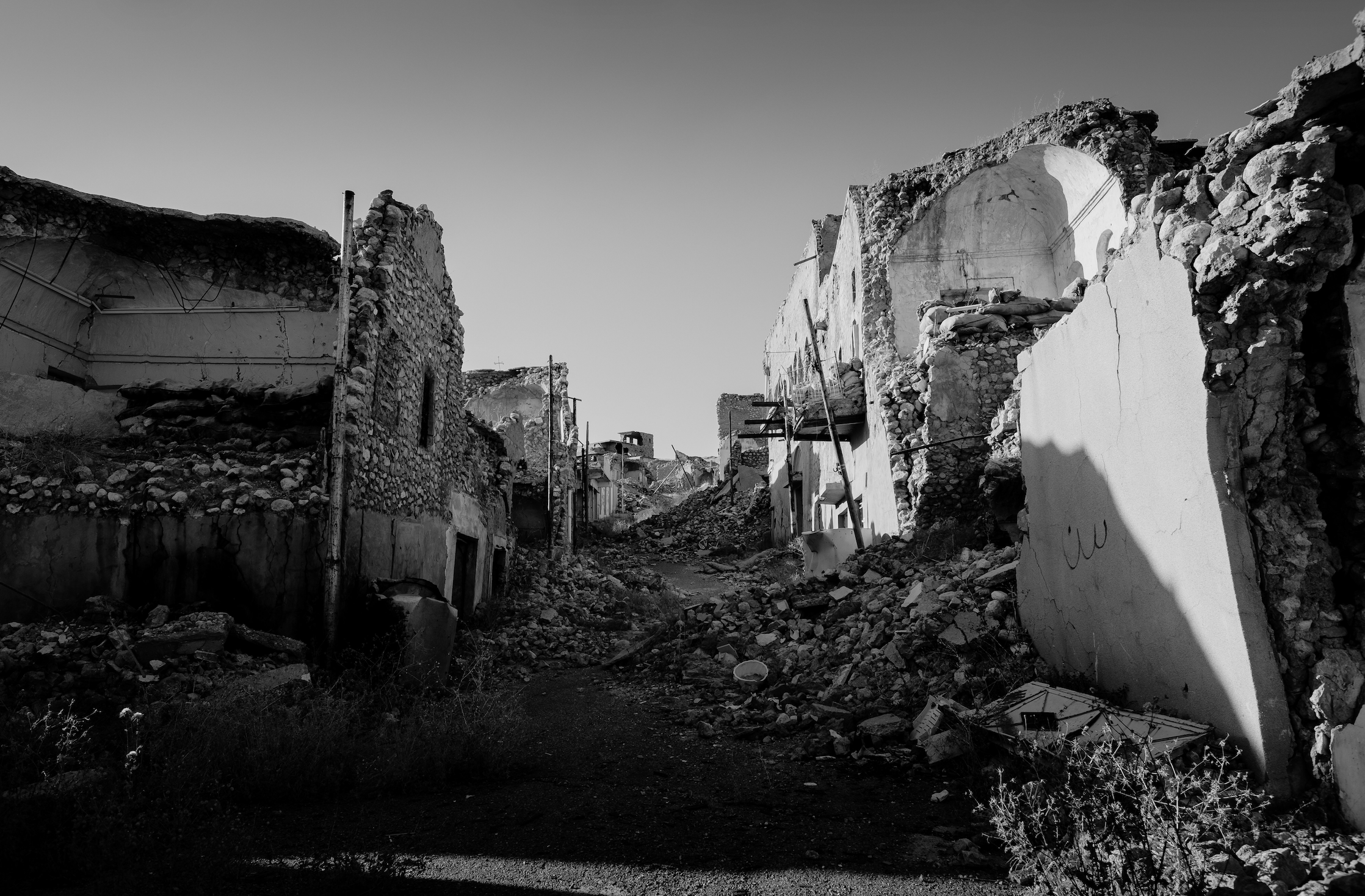
Damaged infrastructure – Damage to infrastructure adds to the environmental toll of war. Up until January 2025, Scope 1 and 2 emissions from the Gaza War were estimated at more than 1.3 million tons CO2e. However, if Scope 3 emissions such as reconstruction of damaged buildings, land use change and displacement of people is included, this number would rise to 33.2 million tons CO2e. Rebuilding homes in Gaza is estimated to account for 85% of post-conflict emissions, equating to 26,858.6 KtCO2e of GHG emissions. The emissions from a strike are variable, depending on the type of infrastructure hit in attacks such as power plants and defence systems.
On herbicides – In southern villages of Lebanon, Israeli aircraft were accused in February of spraying herbicides across the landscape, up to 30x the acceptable level and equating to an environmental and health crime. Israel Defense Force refused to comment on the matter. Herbicides have been used previously in war, famously through the US use of Agent Orange in Vietnam. Over 300,000 US veterans and 400,000 Vietnamese people’s deaths have been linked to exposure to Agent Orange during the war, due to the chemical dioxin, which is toxic to plants, animals and humans. The environmental toll has never been properly recorded. Nevertheless, 4.5 million ha of forest was destroyed between 1961 and 1975 by 72 million litres of defoliants and herbicides causing substantial biodiversity loss. This has knock on affects for future generations.
Looking forward – On the date of writing 15 June 2026, the US and Iran have entered a memorandum of understanding to end the fighting in the Middle East, however Israeli forces have announced they plan to remain on the lands in Gaza, Lebanon and Syria “indefinitely”. As terms of the US-Iran agreement unfold, the planet and people will feel the repercussions not just economically, politically and personally, but also environmentally for a very long time.

Social

© 2026 Curation ESG - All Rights Reserved
Made by MDN Digital



.jpg)